What Chiang Mai Gains From Becoming a UNESCO Learning City
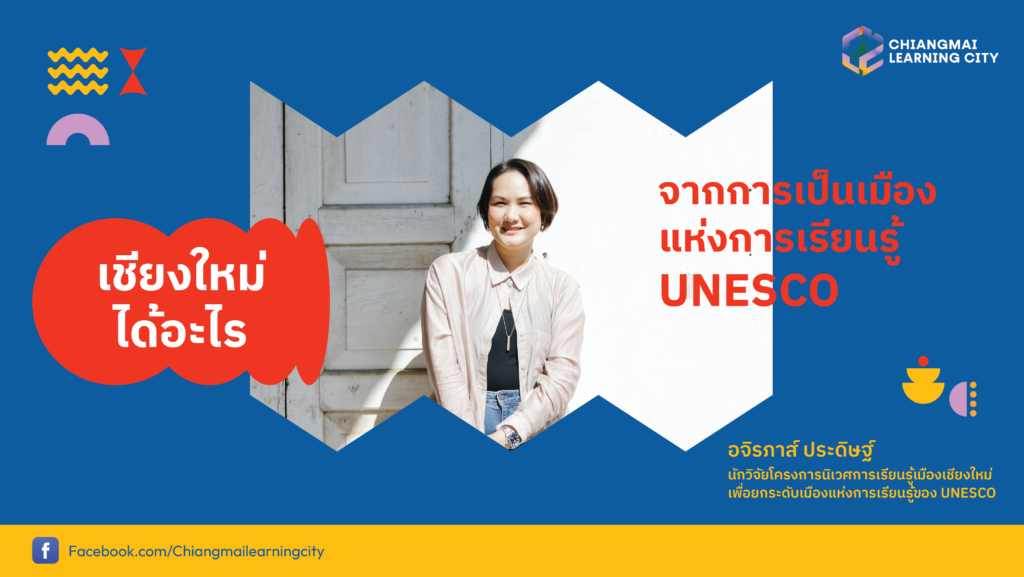
“The UNESCO Learning City award is a catalyst that helps the government recognize the importance of urban development with people at the center,” said Ajirapa Pradit.
Ajirapa Pradit
Researcher of the Project Toward UNESCO Lifelong Learning Awards for Sustainable-Base Development Management Plan of Chiang Mai Learning City
In addition to supporting collaboration and connecting the learning ecosystem to improve the economy and quality of life in Chiang Mai, a key goal of the Chiang Mai Learning City project for 2024-2025 is to apply for the UNESCO Learning City Award.
But beyond international recognition, how will this status benefit Chiang Mai and its people? We spoke with Professor Ajirapa Pradit, a lecturer at the Faculty of Arts and Architecture, Rajamangala University of Technology Lanna and a researcher for the Chiang Mai Learning City project, about the award’s significance and her hopes for making Chiang Mai a global learning city model.
First, what is the UNESCO Learning City Award and why is it important?
The UNESCO Learning City Award is given to cities that are members of the Global Network of Learning Cities and serve as examples in promoting quality education and lifelong learning. It is based on progress in developing a learning city according to the evaluation criteria in UNESCO’s guiding documents for the Global Network of Learning Cities. This award recognizes cities that exemplify improving the quality of life for residents through ensuring quality and equitable education, aligned with UNESCO’s Sustainable Development Goals (SDGs).
Chiang Mai has been a member of this network since 2019, which has provided opportunities to exchange knowledge and development strategies with cities worldwide. This is the first year we are submitting documentation to apply for the award.
What benefits will Chiang Mai city gain from this award?
Being recognized internationally as a model learning city is one thing, but I think it is a great opportunity to assess how the city’s learning mechanisms impact economic development and the quality of life for residents. It allows us to evaluate whether adjustments or enhancements are needed. Additionally, this award acts as a catalyst, encouraging the Chiang Mai Municipality to integrate the learning city framework into urban development plans, which involves active public participation.
How is the Learning City concept connected to the process of public participation?
The heart of learning is people-centered, especially in Chiang Mai, where we focus on community culture as a driving force for the city’s economy. This mechanism is clearly seen in the traditions and festivals of the city, especially the three main festivals: Songkran, the Inthakhin Ceremony, and Yi Peng. These events involve community collaboration, from making ritual objects to organizing the festivities. The learning ecosystem emerges naturally; as a community member, you learn, or if you’re an outsider, participating in the traditions allows you to learn alongside the community.
Can you briefly explain the process of your work?
We began developing the conceptual framework at the end of 2023, working closely with the Chiang Mai Municipality’s Office of Education and Culture. We started by reviewing various development plans and funding sources, while also studying examples of cities abroad that use culture to drive local economic development to see what tools they offer. Throughout 2024, we organized activities to promote learning activities, collect data, and synthesize information. In 2025, we plan to begin drafting the UNESCO award application and the action plan for a sustainable Learning City.
In fact, nominating a city for the award adds an extra responsibility for government agencies. How did you persuade them to join this project?
The nomination for the award must come from a local government agency, in this case, the Chiang Mai Municipality. The municipality is already a member of the UNESCO Learning Cities network, and in early 2023, they signed an MOU with PMUA to open the Urban Redevelopment Chiang Mai City (URC). We pointed out to them that the award would fulfill their commitment as a member of the UNESCO network and their ongoing efforts to develop the city in collaboration with PMUA.
At the same time, the municipality already has a mission to promote public participation. Many may not know that Chiang Mai is the only municipality in the country with an office dedicated to promoting public participation via the Section of Public Participation for Urban Conservation and Development Promotion, under the Strategy and Budget Division. This office is located at the Chiang Mai City Arts and Cultural Center. The goal of the award aligns with their aim of fostering public involvement, and if the city wins the award, it will bring more recognition to Chiang Mai. Therefore, we believed there was no reason for the municipality to reject this collaboration.
From the perspective of the people of Chiang Mai, what will we gain from this project?
As mentioned in the main objective, we want community culture to become a driving force for economic development. A Learning City is not just about preserving art and culture, but about using the knowledge and learning processes of the city to expand career opportunities, increase income, improve access to education, and foster pride among locals. Especially in creating collaboration models with the government in organizing city festivals or events, where the community plays a central role in organizing them.
At the same time, while preparing the documents for the award nomination, we also have to develop a sustainable Learning City plan. This plan is based on gathering opinions and needs from the community regarding access to learning. It’s a bottom-up proposal presented to the government. Therefore, the award process is not only about ensuring the municipality fulfills its commitment to driving a Learning City, but it also amplifies the voices of the community, allowing them to be heard by city leaders and incorporated into future urban development policies.
In the end, a Learning City is not just an award; it is a significant step for Chiang Mai’s sustainable growth, rooted in culture and the involvement of every person in the city.