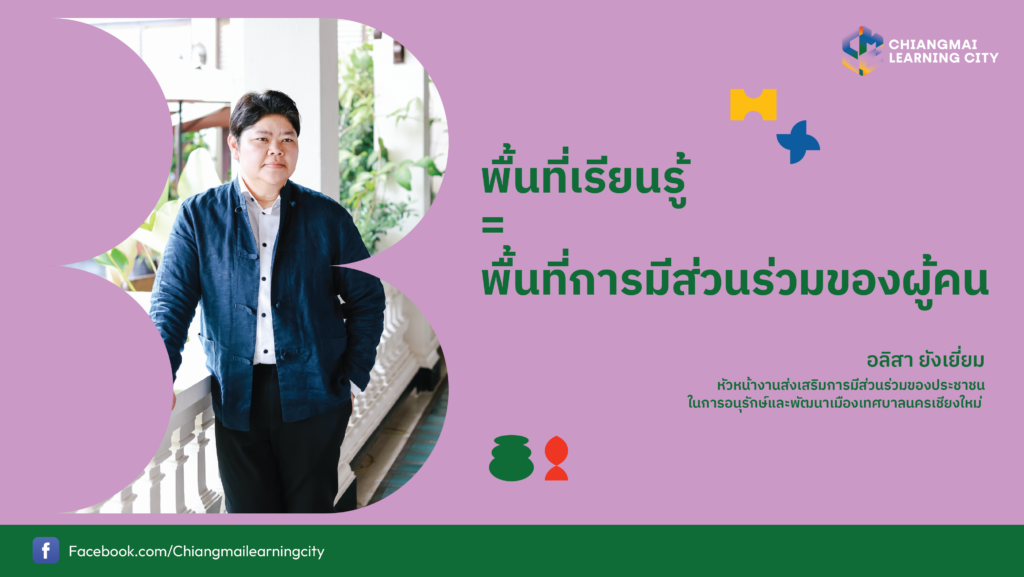
Learning Area is a space for sharing
“Chiang Mai doesn’t face significant issues with learning spaces; the real challenge is effectively communicating this naturally occurring process so that others can understand”
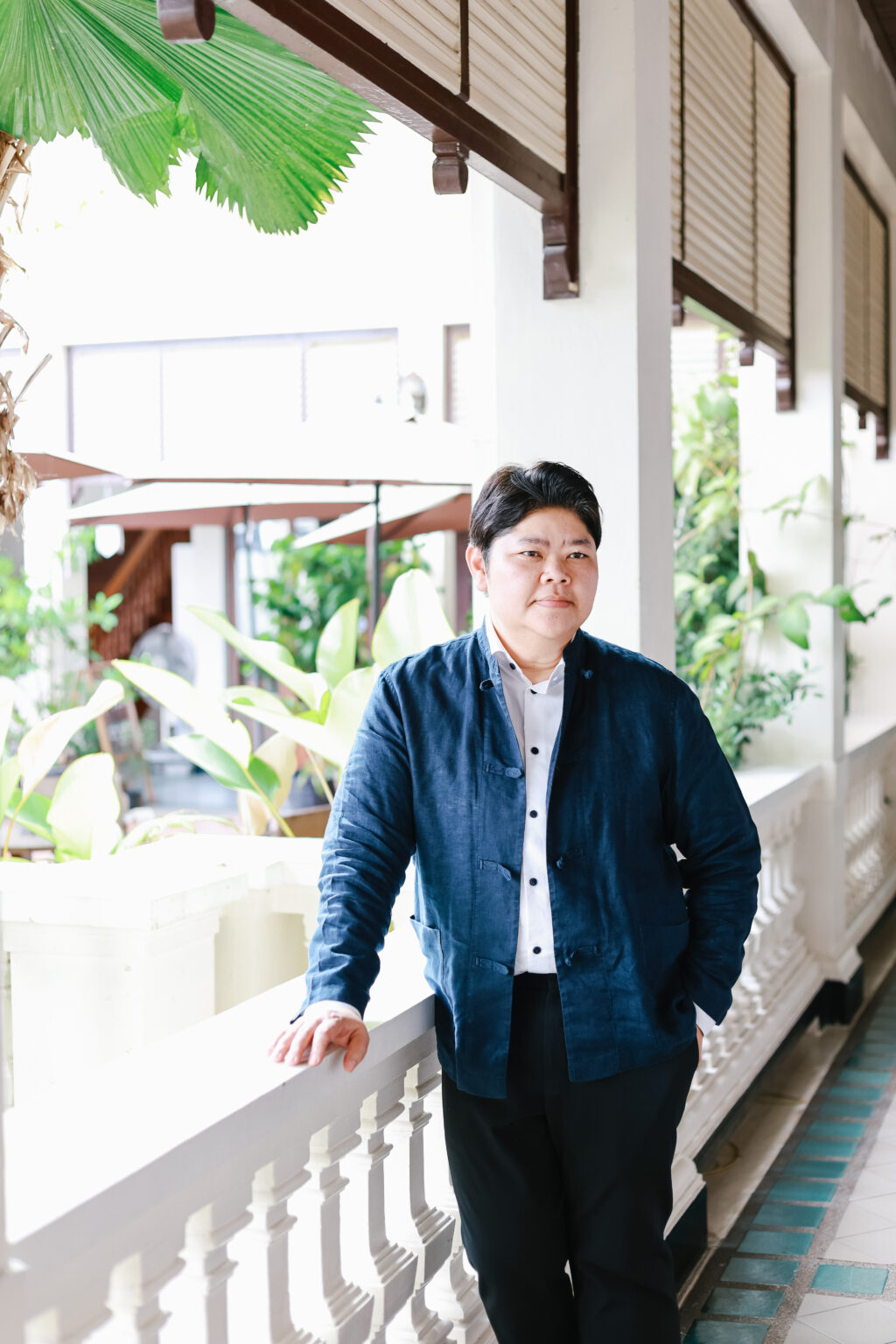
Alisa Yangyiam
Chief of the Section of Public Participation for Urban Conservation and Development Promotion, Chiang Mai Municipality
Located in the heart of Chiang Mai’s Old City, the Chiang Mai City Heritage Center includes key landmarks such as the Chiang Mai Arts and Cultural Center, the Lanna Folklife Museum, and the Chiang Mai Historical Museum. These spaces, surrounding the Three Kings Monument, serve as year-round hubs for traditional activities, festivals, and creative gatherings, embodying the city’s dynamic learning ecosystem.
“There are no traditional directors or managers here,” said Alisa. “Instead, the center is managed by a committee of community representatives.”
The Chiang Mai City Heritage Center emerged from the community’s desire to connect cultural heritage with urban development. This vision led to the renovation of the old City Hall into the Chiang Mai City Arts and Cultural Center in 2002, followed by the addition of two more museums.
“Since the initiative came from the community, the municipality established the ‘Public Participation Section for Urban Conservation and Development’ to manage the space with a community committee. This exemplifies bottom-up change,” Alisa explained.
The Chiang Mai City Heritage Center has not only created public spaces but has also helped build a civil society that drives the city. Over the past 20 years, it has become a platform for sharing knowledge and addressing issues, such as transforming the former women’s prison into a public space, forming the Rak Chiang Mai Network, promoting the city for UNESCO World Heritage status, and organizing festivals linking culture with learning.
“For me, Chiang Mai Learning City isn’t just about resources—it’s about providing everyone the opportunity to learn together. Our learning spaces are also spaces for public participation,” said Alisa.
Chiang Mai has it all—schools, learning spaces, cultural traditions, and a network fostering natural learning. The challenge lies in organizing and sharing this knowledge more effectively. If Chiang Mai can overcome these challenges, our learning resources can drive income generation and sustainable development,” Alisa concluded.
When asked about Chiang Mai’s potential as a UNESCO Learning City, Alisa said, “Our city has it all—from schools and learning spaces to cultural traditions and a network of people and activities fostering natural learning. The real challenge is sharing this and organizing knowledge better. If Chiang Mai can overcome these challenges, our learning resources can become tools for income generation and sustainable development,” Alisa concluded.